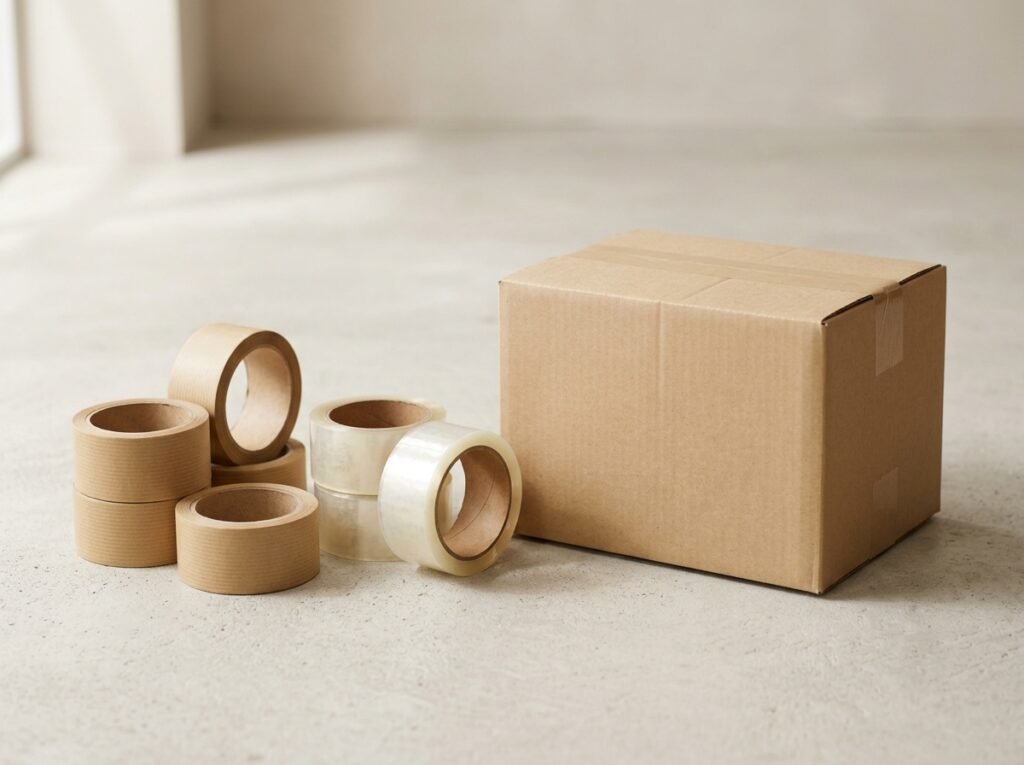
Why “standard packing tape” is not a complete specification
A quote for carton sealing tape can look attractive until the buyer discovers that the roll length, width, backing or adhesive differs from the reference product. Tape is used late in the garment packing process, but a poor match can create wasted material, interrupted packing or avoidable disagreements about what was ordered.
Start by describing the carton and sealing process. Is the tape intended for manual carton closing, a machine-based process, reinforcement or a specific customer-approved method? The answer helps determine which details should be discussed with the supplier.
Five tape details buyers should compare
| Specification | Why it matters | What to ask |
|---|---|---|
| Width | Determines the coverage of the carton seam | Exact width in mm |
| Roll length | Affects how much usable tape is supplied | Length per roll and unit of sale |
| Backing film | Forms the tape’s carrier layer | Material and thickness, if specified |
| Adhesive system | Relates to bonding requirements | Type and suitability for the intended carton |
| Core and packing | Affects handling, equipment and shipment | Core dimensions, rolls per pack and carton |
The documented Packaging Tapes category includes width options such as 24 mm, 45–48 mm, 60 mm and 70 mm. These are available width references, not a claim that every backing or adhesive combination is offered at every width. Confirm the exact construction in the quotation.
Match the tape to the carton and application
A carton used for folded garments may differ from one carrying heavier mixed goods. Explain the carton material, packing procedure and whether the tape is applied by hand or with equipment. If the buyer has requirements relating to temperature, storage or carton surface conditions, communicate them rather than assuming all tapes behave the same way.
Do not use brand names or broad descriptions such as “strong tape” as a substitute for a technical specification. If a known reference roll works in your operation, include its dimensions and construction details or request like-for-like sample review.
Compare the cost per usable length—not only per roll
Two rolls with the same price do not necessarily provide the same quantity of tape. For a straightforward price comparison, calculate the quotation against the specified width and length. Also check whether the price is per roll, per carton of rolls or another sales unit. A lower price per roll may not be better if the roll is shorter or if the backing and adhesive are different.
For example, when you receive two quotations, make sure both suppliers are offering the same 48 mm width, roll length, material construction, packing quantity and delivery term before choosing based on unit price. Do not treat an online retail tape price as equivalent to a bulk export quotation.
Separate garment protection from carton sealing
Many apparel orders use multiple levels of packaging. Individual garments can be enclosed in polyethylene bags, while outer cartons are sealed with tape. Their specifications should be prepared separately because the bag protects the garment at one stage and the tape closes the transport carton at another.
If you are also sourcing the inner bags, our guide to choosing LDPE poly bags for garments explains bag dimensions, film thickness and closures.
How to evaluate samples
Where tape performance is important, establish a repeatable review procedure: use the intended carton material, the normal application process and agreed handling conditions. Record the reference sample, the test conditions and the buyer’s acceptance criteria. A general statement that a tape “feels sticky” does not replace a technical comparison.
Any laboratory or performance requirement should be defined by the buyer or supported by suitable evidence. Do not assume that a supplier’s product meets a particular test standard unless the documentation confirms it.
Buyer checklist for a quotation
- Intended application: carton closure, reinforcement or another purpose
- Tape width and required roll length
- Backing and adhesive requirements, if known
- Colour or custom printing requirements
- Manual or machine application and core specification
- Quantity in rolls or cartons, plus packing preferences
- Destination, requested trade terms and sample requirements
Example enquiry format: “We need carton sealing tape for garment export cartons: width [ ] mm, roll length [ ] m, colour [ ], backing/adhesive reference [ ], application [manual/machine], quantity [ ] rolls, delivery destination [ ]. Please confirm rolls per carton and quotation unit.”
Frequently asked questions
Is wider tape always necessary? No. The required width depends on the carton and approved sealing procedure. A wider roll is not automatically better for every operation.
Can I compare tapes by price per roll? Only after matching the roll length, width, construction, packing and commercial terms.
Do I need to specify the adhesive? If the adhesive type or performance is important, yes. Otherwise describe the application and provide a reference sample or approved requirement.
Review DV Trims’s packaging tape range or request a sample to discuss a specified roll before a bulk order.